
Shiisa: Guardians of Home and Spirit
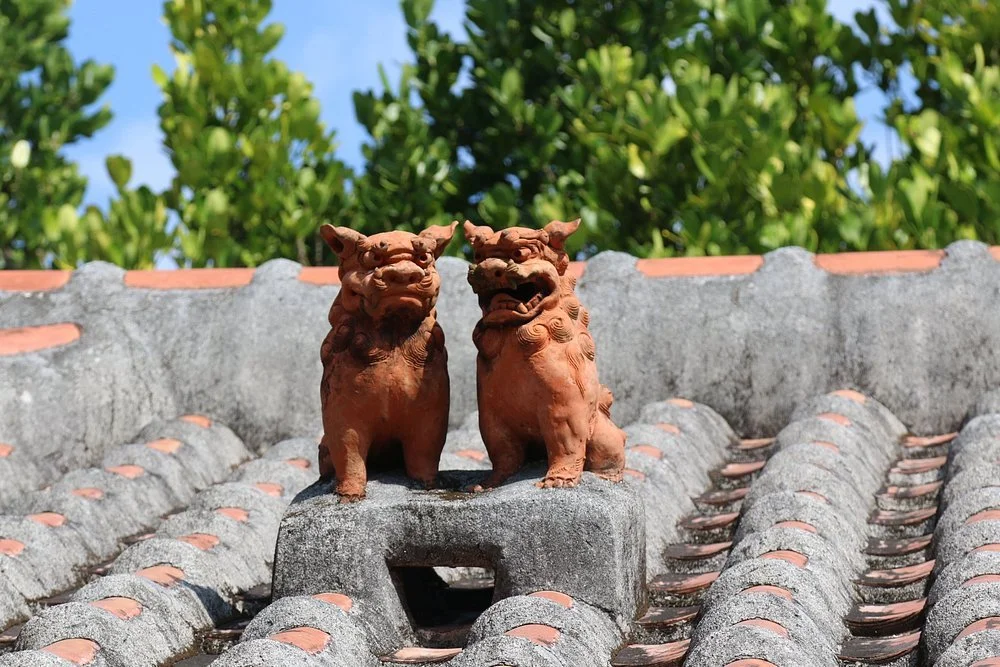
The shiisa (シーサー) are lion-dog guardians that stand on rooftops and at gates across Okinawa. Their origins trace to Chinese guardian lions (shishi), introduced through tributary exchange during the Ryukyu Kingdom era. Over time, Okinawans reshaped the form, giving shisa a distinct island character—less regal and symmetrical than their Chinese counterparts, more rustic, expressive, and tied to daily life.
Traditionally, shisa were made of clay or stone, often by local potters using the same kilns that produced vessels and tiles. Families placed them on rooftops, gates, or walls to protect homes from misfortune and malevolent spirits. They became both spiritual protectors and cultural symbols.
Shisa appear in pairs: one with an open mouth to expel evil, one with a closed mouth to keep good fortune within. They embody protection, balance, and blessing. Their expressions vary—some fierce, others playful—reflecting the individuality of the artisans who made them.
Beyond the household, shisa guard shrines, schools, bridges, and public spaces. They are woven into festivals, art, and popular culture, becoming one of the most recognizable emblems of Okinawa.
The use of shisa spread widely during the Ryukyu Kingdom and took on new meaning during times of hardship. As assimilation policies and war threatened Okinawan identity, shisa endured as visible protectors of community. Many historic figures were lost during the Second World War, yet families and potters continued to craft new ones, ensuring their presence never vanished from rooftops.
Shisa remain vital in both traditional and contemporary Okinawan life.
Pottery villages such as Yachimun no Sato in Yomitan host workshops and studios where shisa are still handmade.
The Tsuboya Pottery Museum documents historic and modern examples.
Artisans create shisa in a wide range of styles, from traditional clay guardians to colorful contemporary designs.
Shops across Okinawa, including the Okinawa Craft Industry Promotion Center, sell both everyday and collector’s pieces, directly supporting local potters.
In diaspora, shisa adorn Okinawan community centers, keeping their protective presence alive far from the islands.
To me, shisa embody both strength and joy. Their faces, sometimes fierce and sometimes playful, remind me that protection can take many forms. They are guardians of thresholds, standing between worlds, holding both shadow and blessing. To place a shisa is to acknowledge that home is sacred and that spirit belongs in daily life.
May your gates be guarded with strength.
May your thresholds welcome blessing.
May your spirit find protection in clay and stone.
And may the shisa continue to watch over
homes, villages, and islands with care.
—Jade
