
From Kingdom to Colony
The Cultural Cost of Annexation
To understand what has been lost and what remains of Ryukyu culture, we must speak plainly about colonization.
The formal annexation of the Ryukyu Kingdom by the Meiji Empire marked a turning point not only politically, but culturally and spiritually. It signaled the beginning of a slow and systematic unraveling of Okinawa’s distinct identity.
Language: From Uchinaaguchi to Silence
The languages of the Ryukyu Islands especially Uchinaaguchi, spoken on Okinawa Island are not Japanese dialects. They are unique languages in their own right, rhythmically passed down through oral storytelling, song, and ceremony.
After annexation, these languages were labeled “backward,” and Japanese-only education was enforced. Children were punished for speaking in their native tongue, often forced to wear wooden “dialect tags” around their necks as a form of public shame.
Over time, these policies led to a rupture in language transmission. Today, Uchinaaguchi is considered critically endangered.
But language is more than communication. It carries memory, worldview, and ancestral knowledge. To lose it is to lose the subtle threads that connect us to place, story, and spirit.
Spirituality: From Sacred Leadership to Marginalization
Okinawan spiritual life was once led by women. The noro, or village priestesses, and the kikoe ōgimi, the kingdom’s high priestess, held public and ceremonial authority. They maintained sacred fires, guided agricultural and fertility rites, and served as the heart of communal spiritual life.
After annexation, these roles were deemed outdated or superstitious. Many utaki (sacred groves and sites) were paved over or claimed for development. The state’s push to centralize Shintoism gradually displaced local cosmologies and women’s spiritual authority.
The result was a severing of ritual rhythm one that once moved with the land, seasons, and the breath of ancestors.
Governance: From Sovereignty to Subjugation
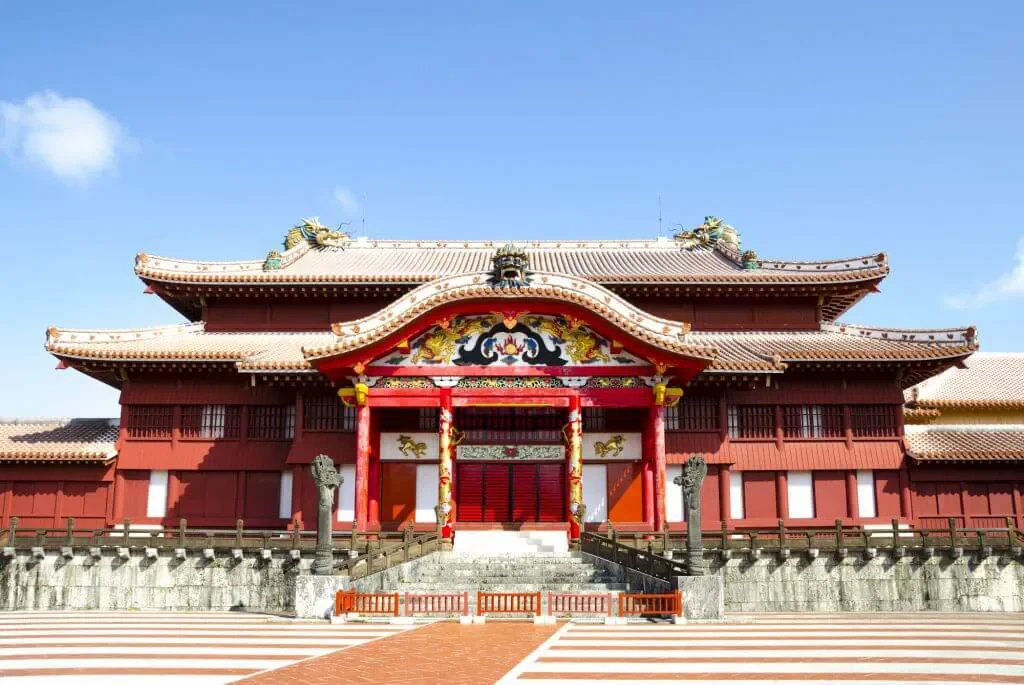
For centuries, the Ryukyu Kingdom managed its own affairs: foreign policy, legal systems, economics, and ceremonial life were guided by Ryukyuan officials from within the capital at Shuri.
Annexation abolished these institutions. The king was dethroned and absorbed into Japan’s noble class. The royal court was disbanded. Local officials were removed or reappointed under Japanese authority. Lands were reclassified as state property.
In place of community-based governance came bureaucracy, taxation, and policies aimed at assimilation. The Okinawan people were no longer a sovereign nation but imperial subjects.
Cultural Arts: From Ceremony to Commodity
Ryukyuan culture flourished in music, weaving, dance, poetry, and lacquer work. These arts were cultivated over centuries and carried deep ceremonial and spiritual significance particularly at court and in seasonal festivals.
Under Japanese administration, many of these expressions were diminished or transformed. Some were labeled as “folk” or “primitive.” Others were removed from sacred context and marketed as exotic entertainment for tourists. The ceremonial became performative. The ancestral became aesthetic.
Bingata, once a sacred dyeing technique used in royal garments, became a souvenir print. Court music was preserved but disconnected from the rituals it once accompanied.
Social Life: From Matrilineal Cohesion to Fragmentation
Traditional Okinawan society centered around ancestral land, communal households, and matrilineal inheritance. Home altars honored the dead. Farming, midwifery, and healing were passed through women’s lines.
Following annexation, the Japanese household registration system (koseki) imposed patrilineal naming. Surnames were standardized. Property was reclassified. Military conscription drew men into distant wars. Education increasingly emphasized Japanese customs, values, and histories.
Village structures changed. Ritual cycles were interrupted. Generational ties to land began to loosen.
The Cost and the Continuity
The annexation of Okinawa was not a singular event, but a long unfolding a quiet colonization of language, spirit, land, and mind. It reshaped the daily lives of people who had once lived in sovereign rhythm with sea, soil, and star.
And yet Okinawan culture persists.
To honor Okinawa today is to recognize this history. When we cook its foods, speak its names, and tend to its stories, we are not just practicing cultural appreciation we are participating in cultural restoration.
May the roots that were buried rise again.
May the language return like birdsong at dawn.
May every offering made in reverence
Weave Us back Into the fabric of Remembrance.
-Jade
